
I meant to fix my website
I’m Tomomi Seki, a sake journalist and writer. I started out planning to redesign my own homepage, and almost as soon as I began, I realized it wouldn’t mean much. I write constantly, some of it on commission and some of it simply because I want to. What I want people to know about isn’t me. It’s the towns where the breweries are. So instead of polishing a portfolio, I decided to build a place where writing piles up town by town.
A quick word on the name. In Japanese, sake (酒) means alcohol in general, not only the rice drink the rest of the world calls sake. My own training is in nihonshu, Japanese rice sake, but I’ve also made cider, and this site will cover shochu, awamori, cider, mead and wine too. The name Machitosake simply means “towns and drink.”
I’ve been writing freelance for ten years, and for five and a half of them I also worked as a kurabito, a brewery worker, at Sanyohai Shuzo, a sake brewery in Shiso, a mountain town in Hyogo Prefecture, west of Kobe. From November 2018 to March 2024 I did both jobs at once. I also handled PR for the city of Shiso, and in February 2019 I poured Shiso’s sake at Tabisuru Stand, a kiosk on Shintora-dori in central Tokyo that showcased a different region of Japan each season. A lot of people traveled to Shiso to see me there, and some of them came back again and again.
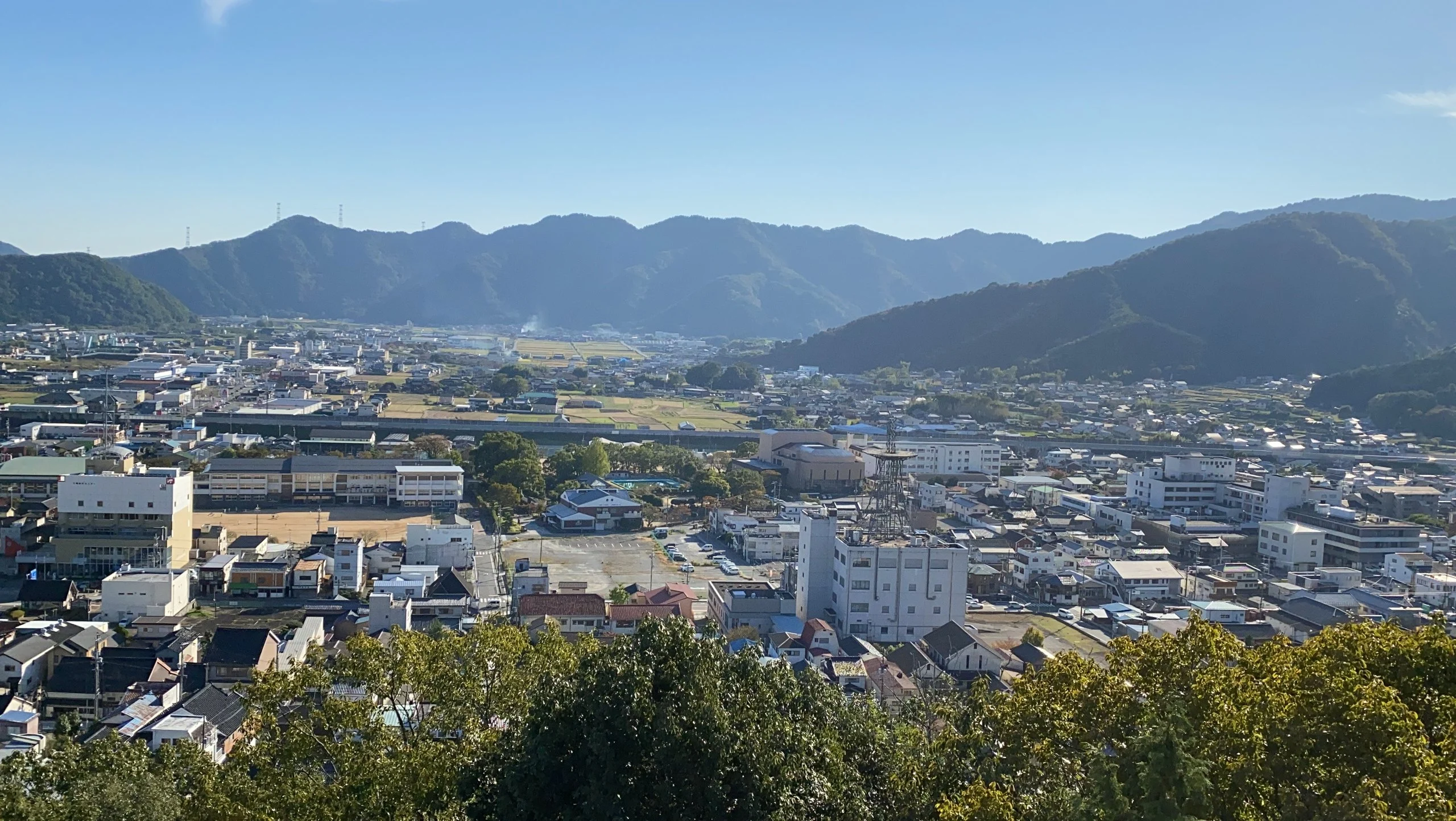
For a town like Shiso, that was no small thing. Shiso is written 宍粟, and even many Japanese people can’t read those two characters. It lies deep in the mountains, far from the Seto Inland Sea and up against the border with Okayama Prefecture, about an hour’s drive north of Himeji, the city known for Himeji Castle, and an hour and forty minutes from Kobe on the expressway. Around 90 percent of the city is forest. The clear Ibo River runs through it, and the region’s famous Ibonoito somen noodles are named after it. About 33,000 people live there.
“Please don’t say ‘just Shiso’”
On November 8, 2018, the day before I was due to start, Sanyohai Shuzo caught fire. I arrived the next day, and my life as a kurabito began with clearing out the burned buildings. For a while, many people bought the brewery’s Banshu Ikkon sake to help it recover. I was grateful, and I also knew that kind of support fades. In the end, people reach for a bottle because it tastes good, or because opening it makes an evening feel a little special.
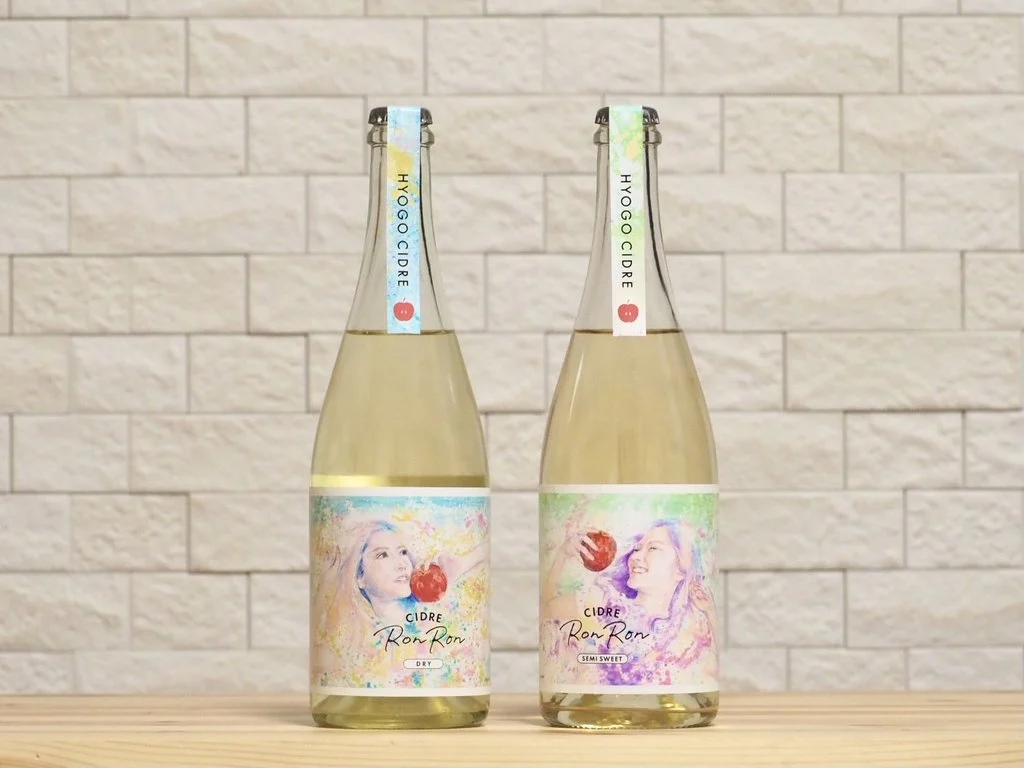
So, as part of the brewery team, I planned a cider made from Hyogo apples: CIDRE RonRon. A sake brewery making fruit liquor is less strange in Japan than it may sound. Breweries in Nagano, in the mountains of central Japan, and in Hokkaido, in the far north, make apple liquor when their regions ask them to, and in the fruit-growing prefectures of the northeast, such as Yamagata and Fukushima, many breweries make pear and peach liqueurs. Masataka Taketsuru, who founded Nikka, sold apple juice from Yoichi in Hokkaido while his first whisky was still aging. But I didn’t want to blend fruit into sake. Many Japanese people still had no idea what cider was, and I wanted to make something good-looking and delicious enough to raise at a party toast. Hardly anyone in Japan dislikes apples. I’m allergic to them myself, and I love them more than anyone, so I developed that cider at some risk to my own health.
I made the bottle stylish on purpose. I hoped that young people from Shiso, now living in Kobe or Osaka, would spot it in a shop and think, “Wait, that’s from home.” On November 8, 2020, exactly two years after the fire, we launched it on Makuake, a Japanese crowdfunding platform. It sold out in 18 days. Four hundred backers bought close to 1,800 bottles from six trial tanks, and the campaign raised 3.34 million yen against a 300,000 yen goal.
The friends I made from Shiso would say “Shiso nanka” almost every time the town came up: “Oh, it’s just Shiso. There’s nothing here.” Japanese people are raised to play down what is their own, and that habit runs especially deep when it comes to home. But something else is at work too, and I think it happens everywhere. What has always been around you is the hardest thing to see. Plenty of people decide as teenagers that their hometown has nothing, then come back as adults and find the mountains, the warmth of the people, the vegetables that taste better than anything in the city. Often you have to leave before you notice, and even then it can be hard to put into words. The Shiso I knew had friends who found it hilarious that a woman from Tokyo had moved there and took me out drinking to teach me about the town, and a butcher whose owner went out of his way to be kind. It was a lovely place. No town in Japan deserves to be laughed at for its name.
In my office years, I was too rebellious and too determined to do things properly, and I didn’t always fit in. I spent a long time in accounting, and I also worked as a secretary, in general affairs and sales support, and in customer service. I took live-in jobs on Sado, an island in the Sea of Japan off Niigata, and on Amami Oshima, a subtropical island between Kyushu and Okinawa, too. On Sado I drank Manotsuru, the island’s sake, and on Amami, kokuto shochu, made from brown sugar and rice koji. That is what Japanese people call jizake: the drink of the place you’re in. In Japan, the expected path was to join one company and stay. Most of my classmates did. Next to them, my patchwork of jobs felt like proof that I couldn’t commit to anything, and those were hard years. At a brewery run by a family and the people around it, every one of those scattered experiences turned out to be useful. I was surprised that such a place existed.
I know several classmates who couldn’t bear working in the city and went home to Sapporo, the city in Hokkaido where I grew up. Going back to where you grew up is one way. Another is to find, in a town you had no connection to, a place where everything you’ve done finally counts. For me that place was a brewery in Shiso.
When you can’t choose where you live
The friends I made in Shiso were about my age, and many of them had accepted taking over a family business as their duty. In much of rural Japan, succession still follows an old pattern: the eldest son inherits the house and the business, and his sisters and younger brothers can be treated entirely differently. The fewer people a town has, the heavier that duty gets.
I know a little of that weight from my own family. My grandfather ran a construction company in Sapporo. My father paved the road in front of my high school, and the cherry trees planted to mark it still bloom every spring. So when a brewery has been kept going by one family, I don’t see it as someone else’s story.
When we travel and find a view or a flavor we love, it’s because people decided to stay there. The same is true for those of us who left: we have somewhere to go back to because someone stayed. Thinking about that made me feel guilty, and I worried about my parents getting older.
In towns like these, breweries are often the ones that have held on the longest. When a brewery closes, the area loses a hub where people and work meet.
The other half of sake
After seeing my Instagram, several sake sommeliers visiting Japan got in touch. One of them judges at a European competition. They knew rice varieties, polishing ratios and yeast strains in detail, and it was encouraging to meet people in faraway countries who take sake that seriously.
Talking with them, though, I came to think that specs and categories are only half of what sake is. The other half is history, the land and climate of each place, and the temperament of the people who live there. Much of it goes unnoticed even in Japan.
Thanks to family records, and to Japan’s household registration system, many brewing families can tell you exactly which generation they are. Ozawa Shuzo, founded in 1702 in Ome, in the hills of western Tokyo, is now run by the 23rd generation of the Ozawa family. The family is said to descend from retainers of the warlord Takeda Shingen who moved to the area from Kai Province, present-day Yamanashi, and it has been part of Ome’s growth ever since. In Nada (Kobe), the families behind Kiku-Masamune, Hakutsuru and Sakuramasamune founded what is now Nada Junior and Senior High School, and Hakutsuru’s seventh head, Jihei Kano, founded the Hakutsuru Fine Art Museum, which opened in 1934. Breweries like these helped shape the culture and history of their cities, and that past still shapes their relationships with their neighbors today.
Very little of this half reaches readers overseas, whether it’s the story of Nada and Fushimi (Kyoto), Japan’s two great historic sake districts, or of the smallest country brewery. Few people tell it. So I want to put it into words for readers in Japan and beyond. I also plan to report on breweries outside Japan.
Knowing a town through its drink
At the top of Machitosake I put one question: why was this sake made here? By “made” I mean not only the year a brewery was founded but also how the current generation arrived at the sake they make now. Brewing techniques and information now reach every corner of Japan and the world, and still there are breweries that use the hard conditions of their own land to make sake that couldn’t come from anywhere else. They amaze me every time. To me, real jizake isn’t about whether it’s sold locally. It’s sake that only exists because of that place’s water and climate.
Take soy sauce. Many people outside Japan are surprised to learn that it changes from region to region, sometimes completely. In Kyushu, in the southwest, it’s sweet. Kansai, the region around Osaka, Kyoto and Kobe, uses a pale, salty kind for cooking. In Aichi, the prefecture around Nagoya, people eat sashimi with tamari, a dark, rich soy sauce made almost entirely from soybeans, and the local food leans toward strong flavors, so the sake there tends to be full-bodied to match. The seasoning shapes the table, and the sake grows up to suit the table. That’s what gives a place its character. Lining up bottles from all over Japan at a city sake bar and debating which is best is fun. But sake started out on the local dinner table.
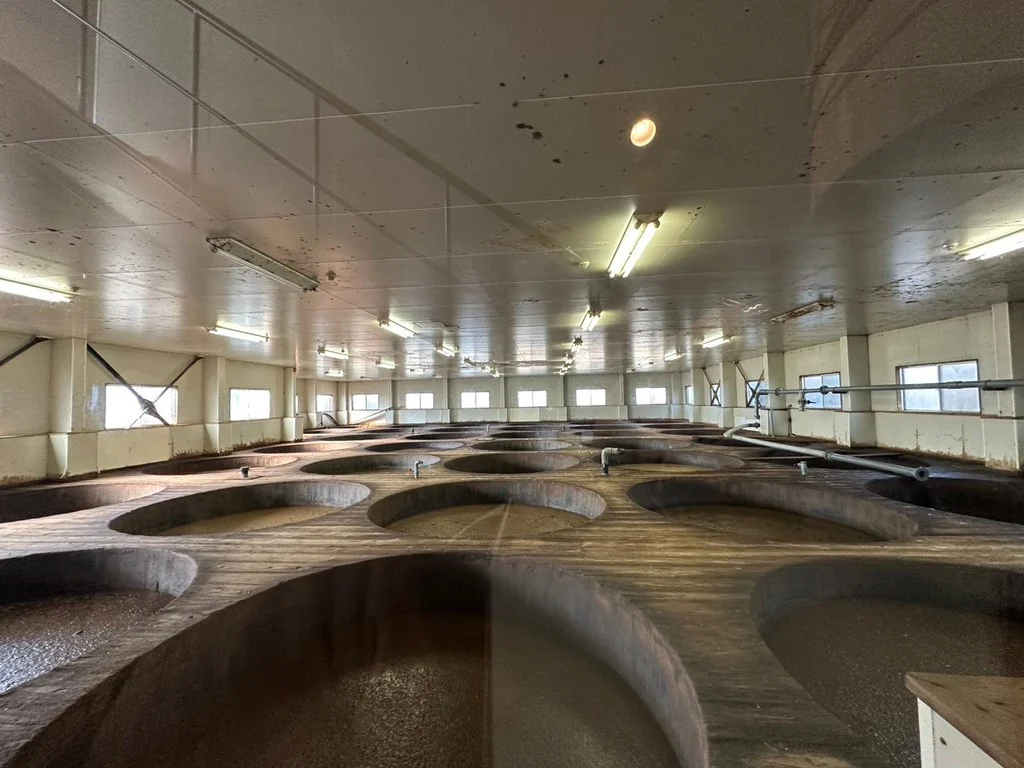
Behind each bottle there is water, rice, and the people who live there. Follow the drink and you end up in farming, geography, labor, law and science, which is why I cover nihonshu, shochu and awamori (Japan’s distilled spirits), cider, mead and wine.
Near a brewery there is usually a castle, and a castle town around it. I started visiting castles and museums to understand the history behind the breweries, and before long I was taking trips just for the castles. Japan has 12 castles whose original keeps survive, and I have two left: Maruoka, in Fukui on the Sea of Japan coast, and Uwajima, in Ehime on the island of Shikoku. I used to know almost nothing about history or geography. Now the country has depth for me, and when I meet someone for the first time, we always have something to talk about: the brewery in their hometown. Travel with a little knowledge and you notice different things, and the towns you like keep pulling you back.
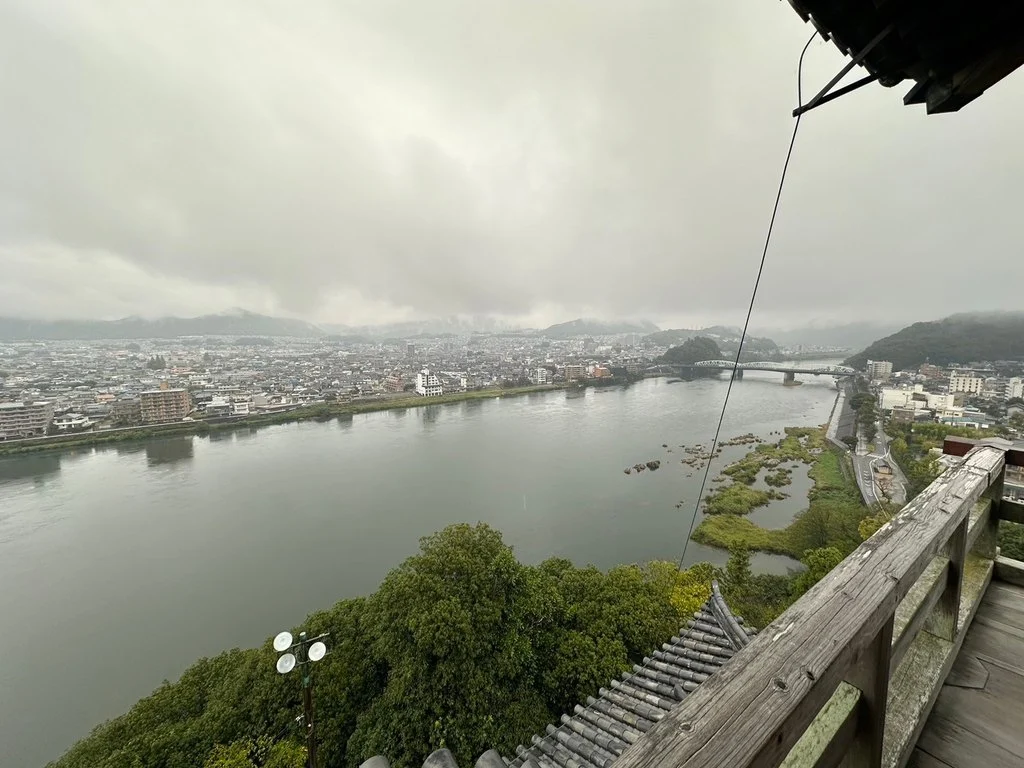
Alongside brewery stories, I’ll publish articles about castles, museums, restaurants, and lunch spots for people who don’t drink. You can search articles on a map, so that on a one-night trip you can plan a full loop: day and night, the brewery and everything around it. On days you can’t travel, look up a town you’ve been to, or one you’d like to visit, and start picturing the next trip.
I travel all over Japan, and brewers often tell me where to eat, so friends message me all the time: “I’m going here next. Anywhere I shouldn’t miss?” This site is my answer, written down.
Articles will come out in English as well as Japanese, castle stories included, and I aim to publish at least one piece in English every week. Inquiries in English are welcome. The newsletter is in Japanese, so please read it with a translation tool if you’d like it. Tours will start with Japanese travelers, and someday I’d like to put together special tours for visitors from overseas, the kind only I can arrange.
Machitosake opens on November 8, 2026. It’s the day Sanyohai Shuzo burned, and two years later the day CIDRE RonRon sold out: a date I’ll never forget.
I’m the only editor and the only reporter. I’ll keep writing so that you know each town one step better than an ordinary trip would show you, and I’d be glad to have you along.